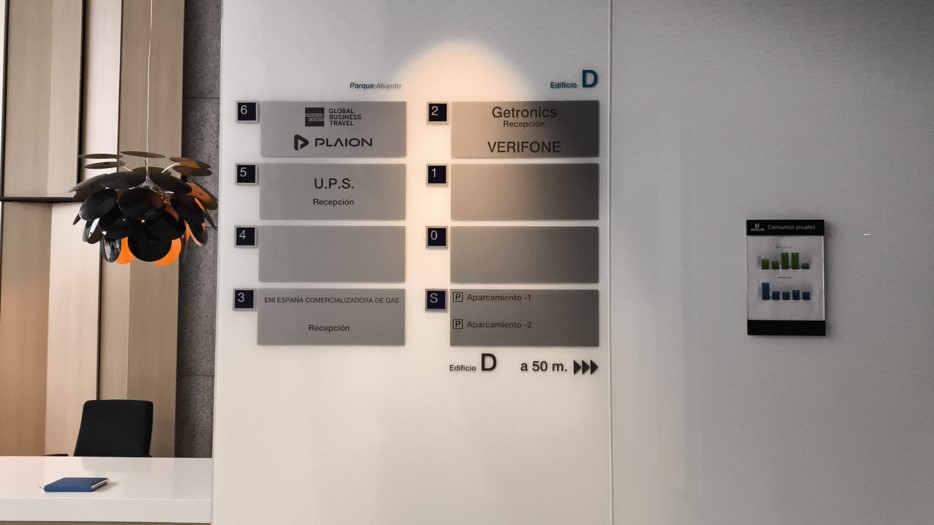
Office Signage Pictograms: How to Identify Meeting Rooms, Offices, and Break Areas Easily
In today’s business world, every detail matters. Office signage, far from being a simple functional element, has become a strategic tool that shapes user experience, enhances productivity, and strengthens brand identity.
In this guide, we’ll explore how door pictograms are essential for creating an organized, professional work environment — and how their design directly influences how your company is perceived.
A well-signposted workplace is a productive workplace. Imagine a client trying to find the meeting room, or a new employee looking for their office. The absence of clear signage not only causes confusion and stress, but also wastes valuable time. This is where space identification pictograms come into play, offering an instant and universal visual solution.
A symbol of a person speaking for a phone booth, or a coffee cup for the kitchen, are clear, direct, and don’t require knowledge of a specific language.
This functionality is the foundation of efficient wayfinding in any corporate environment.
Identifying Key Areas in Your Office
For a truly effective signage system, it’s crucial to correctly identify all spaces:
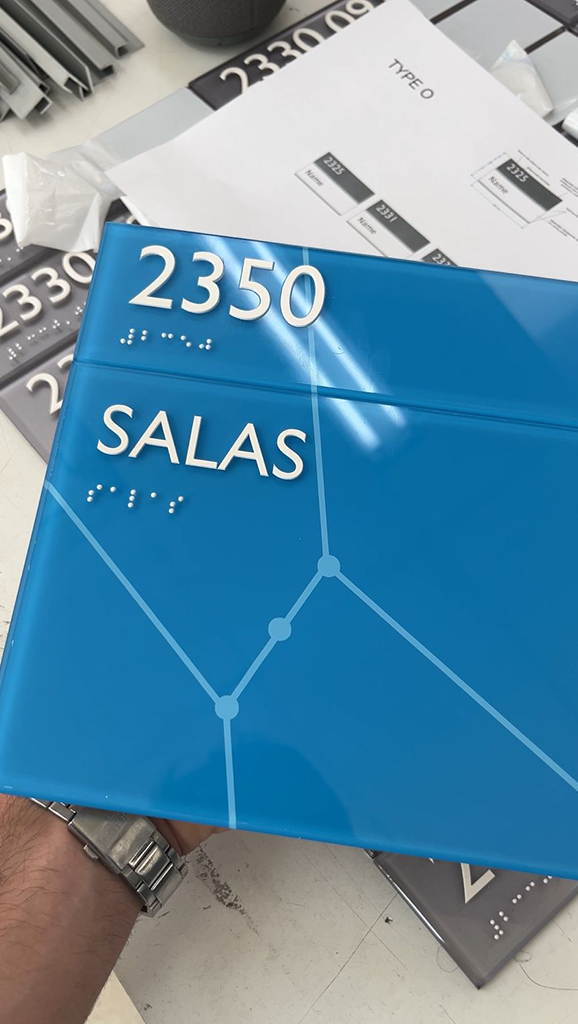
Meeting Rooms: A pictogram of a round table or people gathered around it is a classic. These signs should be prominent so visitors can find them easily.
Private Offices: Office signage can be as simple as the person’s name and title, paired with a pictogram of a desk — adding both a personal and professional touch.
Break Areas and Kitchens: Symbols like a fork and knife, or a coffee cup, guide employees to these essential spaces for rest and wellbeing.
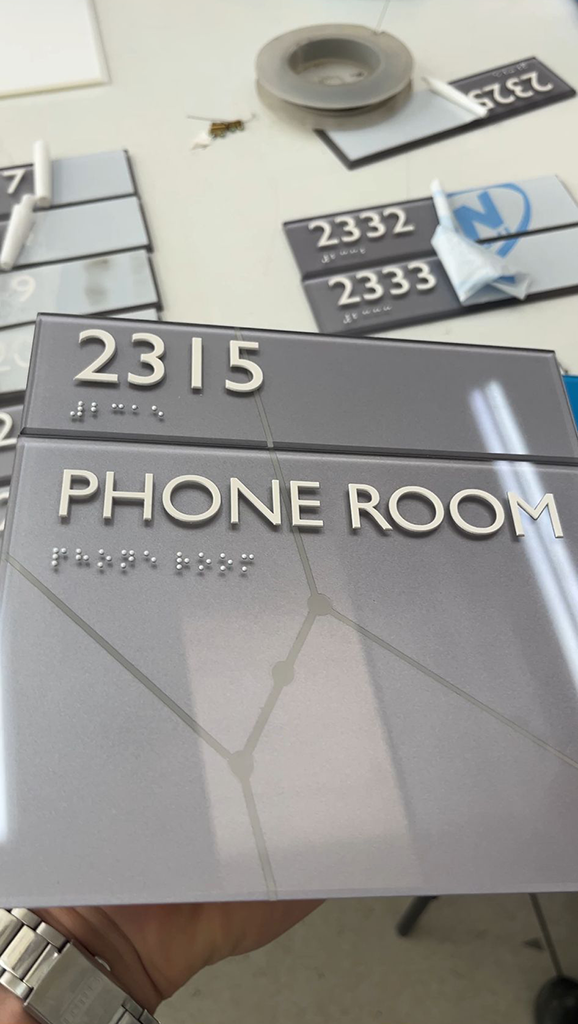
Collaborative Spaces and Phone Booths: With the rise of flexible offices, it’s vital to mark areas for informal collaboration or private calls. A pictogram of people in a circle or a phone inside a booth are modern solutions adapted to today’s work dynamics.
Investing in high-quality pictograms and a consistent signage system delivers a meaningful return. It improves internal efficiency, projects a professional and organized image to clients, and—most importantly—helps create a more comfortable and functional work environment for everyone.